




 廣告
廣告




















































首頁 > automotive-testing > 正文
Fusing GNSS and wi-fi could revolutionize intelligent vehicles
2019-09-05 14:15:17· 作者:RACHEL EVANS

An Innovate UK project is looking into the potential for intelligent vehicles and smart devices to gain more accurate location awareness by ‘fusing’ global navigation satellite systems (GNSS) and wi-fi signals.
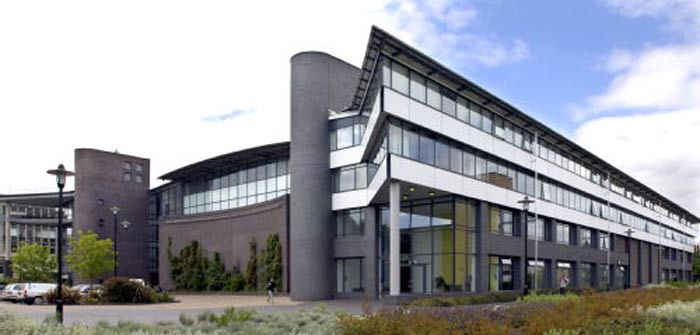
An Innovate UK project is looking into the potential for intelligent vehicles and smart devices to gain more accurate location awareness by ‘fusing’ global navigation satellite systems (GNSS) and wi-fi signals.
Led by Spirent Communications and involving WMG at the University of Warwick, the £694,000 (US$940,620) Enhanced Assured Location Simulator Leveraging Wi-fi and GNSS Sensor Fusion (ELWAG) project hopes to develop the means to test the hybrid wi-fi and GNSS location system in a cost effective, repeatable and safe environment – so that manufacturers can verify its performance.
Researchers at WMG, led by Dr Matthew Higgins, associate professor in the Intelligent Vehicles group, will play a significant role in the project. They will take physical layer measurements of both wi-fi and GNSS signals in autonomous vehicle scenarios, in and around the University of Warwick campus and on the local urban road network.
These measurements will then assist in Spirent’s development of an RF propagation model that will overlay RF effects on their wi-fi access point simulator. WMG researchers will then perform RF validation and verification activities around the developed model.
Higgins said, “The safety and functional assurance of future autonomous vehicles will be one of the many critical paths to large consumer adoption. Through this project, we will contribute toward providing innovative solutions to the challenges of using sensor fusion in this testing context.”
Dr Erik Kampert, senior research fellow at WMG, added, “This is a highly technical project, which will require a holistic understanding of the signal propagation characteristics between satellites, infrastructure and vehicles. The results will impact future autonomous testing methodologies.”
The ELWAG project will run for 18 months, and also involves Chronos Technology.


 廣告
廣告 編輯推薦

最新資訊
-
“汽車爬坡試驗方法”將有國家標(biāo)準(zhǔn)
2026-03-03 12:44
-
十年耐久監(jiān)管時代:電池系統(tǒng)開發(fā)策略將如何
2026-03-03 12:44
-
聯(lián)合國法規(guī)R59對機(jī)動車備用消聲系統(tǒng)的工程
2026-03-03 12:08
-
聯(lián)合國法規(guī)R58對后下部防護(hù)裝置的工程化約
2026-03-03 12:07
-
聯(lián)合國法規(guī)R57對摩托車前照燈配光性能的工
2026-03-03 12:07
