




 廣告
廣告















































首頁 > automotive-testing > 正文
Volvo Trucks demonstrates platooning in North Carolina
2019-09-10 13:58:25· 作者:RACHEL EVANS

Volvo Trucks, in cooperation with FedEx and the North Carolina Turnpike Authority, has demonstrated truck platooning with three Volvo tractors pulling double 28ft trailers.
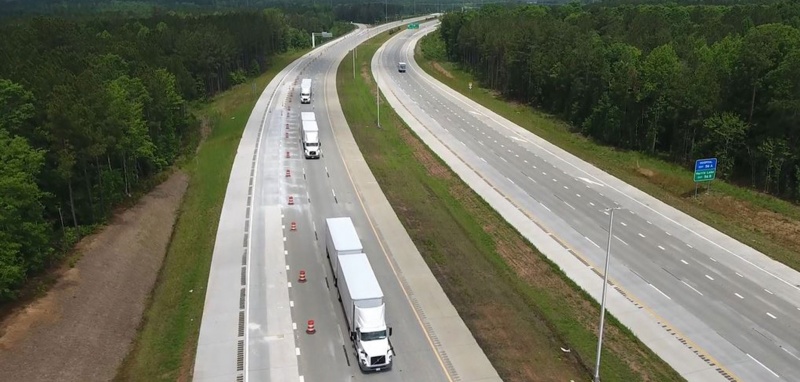
Volvo Trucks, in cooperation with FedEx and the North Carolina Turnpike Authority, has demonstrated truck platooning with three Volvo tractors pulling double 28ft trailers.
The demonstration is part of a collaboration between Volvo Trucks and FedEx, where three Volvo tractors are being used with different types of loads common with FedEx to simulate real-world routes and trailer loads.
This research lets Volvo Trucks develop and improve its Cooperative Adaptive Cruise Control (CACC), a V2V technology based on dedicated short-range communication (DSRC).
The demonstration was performed with three trained, professional truck drivers in Volvo VNL tractors, each pulling double 28ft (8.5m) trailers. The tractors and trailers traveled at speeds of up to 100km/h while keeping a time gap of 1.5 seconds. This makes for a following distance of just over 40m, which is closer than what is typical for on-highway tractors. Both staged and unplanned vehicle cut-ins demonstrated how the technology handles common traffic situations.
Volvo Trucks and FedEx plan to continue developing the Volvo CACC technology on NC 540 into the foreseeable future with the goal of continuing to learn about the potential benefits offered by vehicle platooning.
“Volvo Trucks has long supported platooning because it benefits freight companies and professional drivers alike through safer, more fuel-efficient operations,” said Per Carlsson, acting president of Volvo Trucks North America.
“We continue preparing for deployment of trucks with greater vehicle-to-vehicle communication capabilities that support higher levels of ADAS. We know these technologies will be part of our future, but exact timing depends on many things, namely regulations, infrastructure, safety standards and market demand.”


 廣告
廣告 編輯推薦

最新資訊
-
“汽車爬坡試驗方法”將有國家標準
2026-03-03 12:44
-
十年耐久監(jiān)管時代:電池系統(tǒng)開發(fā)策略將如何
2026-03-03 12:44
-
聯(lián)合國法規(guī)R59對機動車備用消聲系統(tǒng)的工程
2026-03-03 12:08
-
聯(lián)合國法規(guī)R58對后下部防護裝置的工程化約
2026-03-03 12:07
-
聯(lián)合國法規(guī)R57對摩托車前照燈配光性能的工
2026-03-03 12:07
